





Churches gather in places.
Week after week, people arrive, greet familiar faces, drop children at ministry programs, share coffee, join conversations, listen, sing, pray, and head home again. These rhythms are so familiar that it can be easy to overlook the role of the physical environment that supports them. Every church gathers somewhere, and those places quietly influence how people understand where they are, recognise what a community values, and participate in what is taking place.
At the Reach Australia National Conference, we invited church leaders to contribute to an Ideas Wall. We asked three simple questions:
Where does connection happen most naturally in your church?
What needs more space to happen well in your church?
What small spatial change could make a big difference?
The responses ranged from playgrounds and coffee carts to children’s ministry spaces, Bible study rooms, kitchens, acoustics, and courtyards. On the surface, these appear to be observations about buildings. Read together, they offer a glimpse into how church leaders see the relationship between ministry and place.

Connection happens in the spaces between
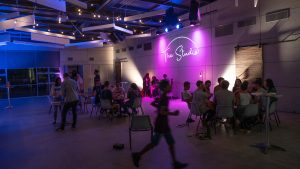
When asked where connection happens most naturally, people rarely pointed to the worship space itself. Instead, they pointed to cafés, foyers, courtyards, front lawns, playgrounds, and community meals.
“In the Café! Lots of table talk over food. Loving others.”
“Front lawn at morning tea after 10am service.”
“Playground + Coffee area.”
“Court yard. Foyer. Where kids can run around.”
As architects, we find this fascinating because these are not typically the spaces that receive the most attention when people think about church buildings. They are often treated as supporting spaces, the areas people move through on their way to somewhere else. Church leaders, however, consistently identified the places where people linger. Places where conversations begin unexpectedly, where visitors become familiar faces, and where relationships deepen over time.
Far from being peripheral to church life, these spaces appear to play a significant role in how community is formed and sustained. While architecture cannot create friendship, trust, generosity, or belonging, place still holds a role. Those things emerge through people, relationships, and shared experiences. At the same time, a courtyard can invite someone to stay a little longer. A coffee area can lower the barriers to conversation. A playground can create opportunities for families to connect while children play nearby.
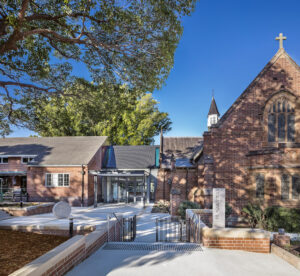
Perhaps this is why so many churches invest considerable thought into gathering spaces. In our work with Parramatta Baptist Church, spaces for hospitality and connection became an important part of the conversation. The project recognised that church life extends beyond the formal gathering. It unfolds in the countless interactions that sit between programmed activities.
The responses from Reach Australia suggest that church leaders are observing something architects often discuss in different language. They know where people stay. They know where conversations happen. They know which places seem to gather people naturally and which remain empty despite good intentions. The language may be different, but these observations are spatial.
The desire for intentional places
Another pattern emerged through a single recurring idea: designated space.
Responses spoke about designated children’s areas, designated spaces for holiday programs, designated places for next steps, and spaces for Bible study groups.
“A designated space for kids ministry.”
“Holiday club needs more designated spaces.”
“Upgrade of kids ministry space.”
The repeated use of the word designated is particularly informative. Across many church projects, flexibility is frequently discussed as a matter of stewardship. Buildings represent significant investments of time, money, and effort, and congregations rightly want spaces that can accommodate multiple ministries, adapt over time, and support future growth.
The responses point to another dimension of stewardship. How effectively does a place support the ministry taking place within it?
A room that hosts five different activities may be highly utilised. It is worth asking whether it supports any of them particularly well.
There is a difference between a ministry fitting within a room and a room supporting a ministry.
This distinction appeared most clearly in responses relating to children. For decades, churches have adapted available rooms for children’s programs with remarkable creativity. These responses suggest leaders are now asking a different question. Whether their space actively supports children’s ministry.
Architecture has always communicated value. The places we create reveal what we prioritise. A thoughtfully designed children’s environment says something different from a room that feels temporary, improvised, or borrowed. The same principle applies to hospitality spaces, meeting rooms, gathering areas, and places for discipleship. People form impressions long before a conversation begins. They notice what is cared for, what feels intentional, and what appears to have been left over.
The responses do not suggest that churches are moving away from flexibility. They do suggest a growing awareness that some ministries flourish when the place itself is shaped around the activity taking place within it. Stewardship, in this sense, becomes more than efficient utilisation. It includes effectiveness, participation, and the experience of the people using the space.
Presence matters
Some of the most revealing responses focused on relatively modest changes.
“Make a large space insulated so it is more welcoming and people want to stay.”
“Some soft flooring for children to also worship and belong in church without having to be super quiet.”
“Getting a kitchen – help build connection.”
“Grow Community, encourage fellowship comfortable zones.”
Better acoustics. More comfortable gathering spaces. Improved hospitality facilities. Softer flooring for children. These suggestions are all about what a comfortable place makes possible.
Staying long enough to have a conversation.
Staying long enough to build a relationship.
Staying long enough to listen, participate, and belong.
Architects are trained to think about light, acoustics, movement, comfort, atmosphere, and spatial relationships. Church leaders rarely describe these things in architectural language but they do experience their effects every week.
A parent notices when a children’s environment works well. A visitor notices when they feel comfortable enough to stay for coffee. A congregation notices when conversations continue long after a service has ended. People may never discuss acoustics, thresholds, wayfinding, or placemaking, but they experience the consequences of those decisions constantly.
This idea sits at the heart of placemaking. People need to be able to understand a space, recognise its identity, and be present within it. Many of the comments on the Ideas Wall can be understood through this lens. They reveal church leaders paying close attention to how their environments support participation, belonging, and community life.
Questions worth asking
Architects speak about thresholds, acoustics, circulation, wayfinding, and placemaking. Church leaders speak about conversations, children’s ministry, fellowship, hospitality, and welcome. Different language perhaps, but often the same observation. Both are trying to understand how place supports people.
The most valuable aspect of the Ideas Wall may not be the specific answers, but the questions those answers raise.
If connection happens most naturally in the café, courtyard, playground, or foyer, what does that reveal about the places where people feel comfortable enough to stay?
If children’s ministry appears repeatedly when church leaders are asked about space, what does that suggest about the environments we are creating for families?
If relatively small changes to comfort, acoustics, hospitality, and wayfinding can have such a significant impact, what role might place be playing in the life of a church that we have not fully considered?
As church leaders reflect on their own environments, perhaps the most useful question is not what needs to be built next, but what their existing places are already communicating.
Where do people naturally gather?
Where do they hesitate?
Where do conversations continue?
Where do children thrive?
What does your place communicate about who you are?
And where do people find it easiest to be present?
 Previous
